 Milford Sound Boat Tour
What to Wear & What to Bring for a Milford Sound Cruise
What to wear to Milford Sound comes down to one word: layers. The boats have indoor seating as well as open decks, so a cruise needs no special gear. What you need is a waterproof jacket, warm mid layers, non-slip shoes and insect repellent, because the fiord collects more than 6,000 mm of rain a year and rain falls on roughly 182 to 185 days of it. DOC puts it plainly: Fiordland's high rainfall means every visitor should have a good raincoat. This page works through each season, each item and what the tours already provide, so you pack once and pack right. If you are still choosing a boat, the Milford Sound boat tour comparison covers every cruise style with prices and durations. The short version: pack for rain and cool air in every month.
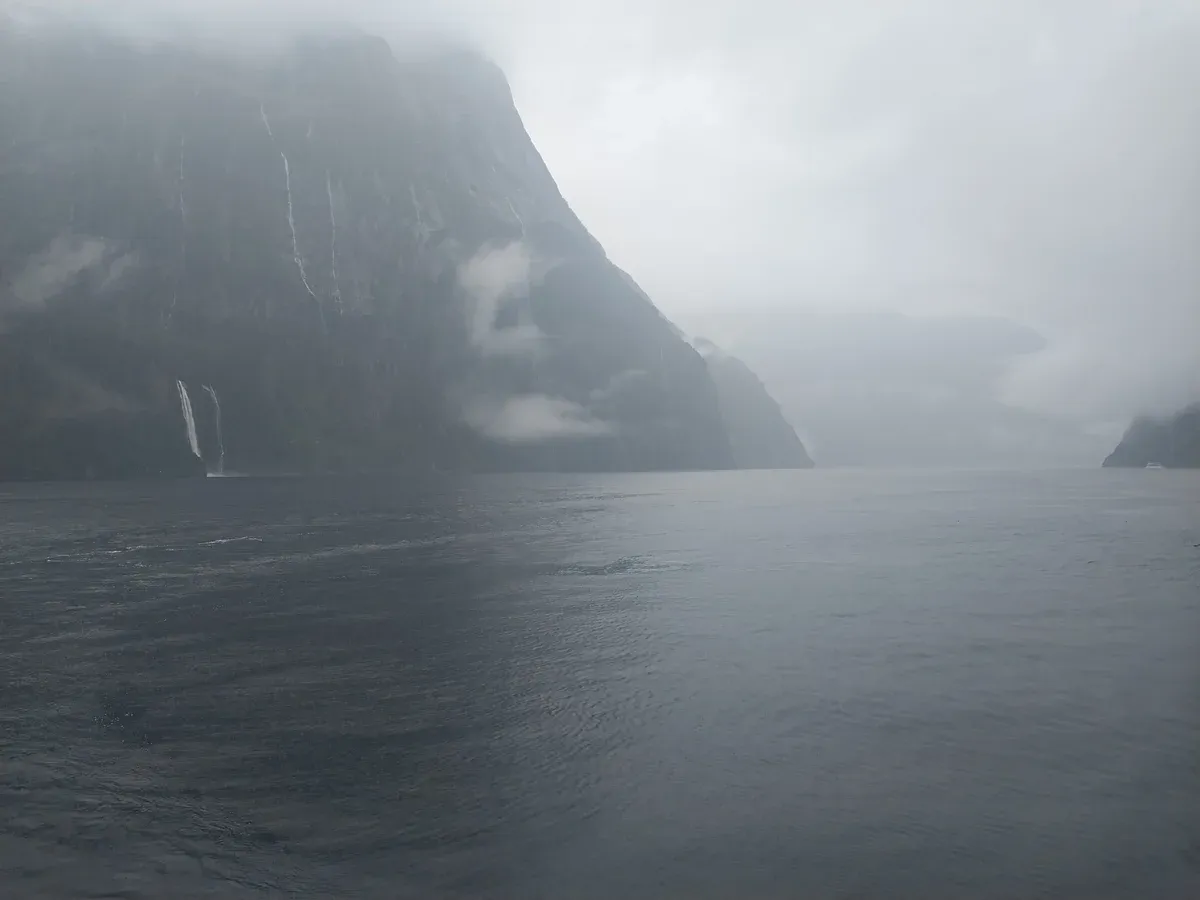
A wide view of Milford Sound during a cruise on a wet April day. Photo: Danny William Wilson, CC BY-SA 4.0, via Wikimedia Commons
Quick answer The short packing answer
Wear warm layers under a waterproof rain jacket with non-slip shoes, and pack insect repellent and sunscreen. Milford Sound gets more than 6,000 mm of rain a year, so a raincoat is the one item you should never leave behind. No cruise needs special technical gear: the boats have indoor seating as well as open decks. Everything else on this page is refinement, not essentials.
Key takeaways
- Bring your own: rain jacket, fleece, non-slip shoes, sandfly repellent, sunscreen and snacks, because the Mitre Peak Small Boat Cruise sells no food on board.
- Check the month before you pack, since the Milford Sound weather ranges from a July mean minimum of 1.6 C to a January mean maximum of 19.5 C.
- The main 'don't wear' is cotton next to your skin, because it stays wet and cold in Fiordland's 92.8% average humidity.
- Comparing boats and prices? Start at the Milford Sound boat tours homepage or see how the seasons differ in the best time to visit Milford Sound.
What to Wear to Milford Sound
Several operators set the tone for the whole fiord. RealNZ's packing list for its day cruises asks for non-slip shoes or boots, a waterproof jacket, a warm sweater or fleece, sunscreen, a hat and sunglasses, insect repellent, a camera and personal medication. Southern Discoveries says the same thing in fewer words: waterproof jacket, warm clothing, comfortable shoes, and layers, because Fiordland weather changes fast. Build your outfit from those two lists and you cannot go far wrong.
Base Layers and Mid Layers
Think in three layers. Next to your skin, wear a synthetic or merino base layer rather than cotton, because cotton holds water and Fiordland's average relative humidity of 92.8% means nothing dries quickly. Over that, a fleece or warm sweater, which is the exact item RealNZ names on its cruise packing list. On top, a windproof and waterproof jacket, which Fiordland tourism recommends specifically for the outdoor viewing decks, where the wind comes straight off the water even on dry days. The average January high at the Milford Sound Airport weather station is 19.5 C, but a moving boat with spray in the air feels far colder, so the layers come off and go back on as the day shifts.
The other reason for layers is the road. Queenstown to Milford Sound is about 290 km of narrow, winding highway that climbs to the Homer Tunnel at 945 m above sea level, so a coach day trip can take you from a mild lake-side morning to a cold mountain pass on the same drive. Dress for the coldest point of the day and peel as needed.
The Rain Jacket
This is the single most important item. DOC's marine reserve notes say Fiordland is well known for high rainfall so every visitor should have a good raincoat, and the numbers back them up: more than 6,000 mm a year, with a record 250 mm falling in a single 24-hour period. RealNZ, Southern Discoveries and Fiordland tourism all include a waterproof jacket in their packing advice.
Southern Discoveries adds a detail most visitors miss: a rain jacket is worth carrying even when it is not raining, because the spray under Stirling Falls will soak you anyway. That waterfall drops somewhere between 151 and 155 m depending on who measures it, and some cruises go close to or under it. If you have no jacket at all, Southern Discoveries sells ponchos, so you are not stranded. But a proper jacket with a hood beats a poncho in Fiordland wind.
Sun Protection
It rains a lot, but it also burns. RealNZ lists sunscreen, a hat and sunglasses on its cruise packing list, and summer days at Milford Sound are long, with darkness not arriving until after 9:00pm in the summer months. A brimmed hat plus SPF on your face and neck covers the hours on an open top deck, where there is little shade.
Sunglasses are worth having on the open decks too.
Sandfly Repellent
Sandflies are Fiordland's smallest hazard and the one everyone remembers. Fiordland tourism tells visitors to pack insect repellent both for the Milford Road and for Milford Sound itself. Southern Discoveries explains the pattern: sandflies are manageable on the cruises but they appear along the foreshore, so bug spray is recommended for the time you spend on land at the terminal, the foreshore walk and the roadside stops.
The genus Austrosimulium has about 30 species, and three of them bite humans. Put the repellent in a jacket pocket, not deep in the day pack, because you will want it the moment you step off the bus at a roadside stop.
Footwear
RealNZ's list says non-slip shoes or boots, and Southern Discoveries says comfortable shoes. That is the whole requirement. A Milford Sound cruise involves no wet landings, no wading and no rough ground: you board at the Milford Sound Visitor Terminal and step onto a deck. The only real risks are wet, slick surfaces and a boat that moves under your feet.
Sneakers or light walking shoes with a grip sole are the right call for nearly everyone, and they double for the short roadside walks on a coach day. Hiking boots are worthwhile only if you are adding a real track, such as a section of the Milford Road walks. Sandals with a secured strap are fine on a warm summer afternoon on an enclosed cabin deck, but keep them off the outdoor decks in any swell. Flip-flops and heels are a poor choice in every case: the wharf and decks get wet, a slide on a moving boat ends badly, and loose footwear blows or skates across the deck in the wind under Stirling Falls. Barefoot is fine inside a cabin and nowhere else.
What the Weather Actually Feels Like by Season
The tables below combine the 1991-2020 climate normals recorded at Milford Sound Airport with RealNZ's season-by-season temperature guidance, so you can match a departure month to a kit before you pack. The airport station sits right at the fiord, so the figures reflect what you will feel on the wharf.
The wide takeaway is that no month is warm-dry. Even January averages 667.2 mm of rain across 16.3 rain days, and the record low at the airport is -6.1 C in July. Pack for rain in every season and add warmth as the year turns.
| Season | RealNZ temp range | Airport normals | What that means for clothes |
|---|---|---|---|
| Summer, December to February | 18-25 C | Jan mean max 19.5 C, min 10.7 C | Light base layer plus fleece, rain jacket in the day pack, hat and sunscreen |
| Autumn, March to May | 12-20 C | Apr mean max 15.9 C, min 7.0 C | Warm mid layer worn all day, rain jacket on, warmer socks |
| Winter, June to August | 5-10 C | Jul mean max 9.2 C, min 1.6 C | Thermal base, heavy fleece, beanie and gloves, fully waterproof outer |
| Spring, September to November | 10-18 C | Oct mean max 15.0 C, min 5.8 C | Autumn kit with one extra warm layer for early morning starts |
Dress for Both the Road and the Boat in One Day
Most visitors do not dress for two venues but for three: the coach or car, the roadside stops and the boat. One outfit with removable layers covers all of them. On a Queenstown day trip you can leave early in the morning, stand at the Homer Tunnel at 945 m where the air is colder, then board a catamaran for the cruise.
Southern Discoveries suggests leaving Te Anau by 8am to enjoy the stops, so the early hours are the cold ones. The formula is simple: wear your warmest walking layer, keep the rain jacket over it until you are on board, then strip to the mid layer in the cabin. Loose items like hats and gloves go into a pocket before any outdoor deck run, because the wind down the fiord takes them.
The same outfit works if you book the Coach and Cruise from Queenstown or drive yourself, since the stops and the boat deck make the same demands.
Color Guide
Color matters less on a cruise than on a safari, but a few choices still earn their place. Bright colors help the crew and your travel companions pick you out on a crowded top deck. Dark colors show rain spots and salt spray less than pale ones.
Camouflage buys you nothing on the water, so it is purely a style call.
| Color | Good? | Why |
|---|---|---|
| White | Context-dependent | Cool in summer sun but shows every rain spot and spray mark within an hour |
| Black | Mostly fine | Dries-looking and practical on the boat, though hot on a still top deck |
| Bright or neon | Good | The crew and your group can spot you instantly on a crowded outer deck |
| Camouflage | Fine | No operator listing mentions camouflage, so it is personal taste |
| Earth tones | Fine | No wildlife benefit from the boat, but sensible if you add a bush walk |
| Cotton | Avoid | Stays wet and cold in 92.8% average humidity and chafes when damp |
What to Bring to Milford Sound
The checklist below combines the packing lists from RealNZ and Southern Discoveries with the practical notes from Fiordland tourism and Milford Sound Lodge. Nothing on it is exotic. The point is the reasons, because several items exist only because of how this particular fiord and this particular road behave.
The Checklist
Tick these off the night before. Every item carries its reason, because a bare list is how the repellent stays at the motel.
- Waterproof rain jacket, because the fiord gets more than 6,000 mm of rain a year
- Warm fleece or sweater, because RealNZ lists it on its cruise packing list
- Non-slip shoes, because decks and wharfs stay wet
- Insect repellent, because sandflies wait along the foreshore
- Sunscreen, hat and sunglasses, because summer light runs past 9:00pm
- Snacks or packed lunch, because some boats sell no food at all
- Refillable water bottle, because there are no shops on the water
- Personal medication plus backups, because Milford Sound Lodge advises carrying spares
- Waterproof phone or camera cover, because spray can reach the decks
- Small day pack, because you need both hands free on the wharf
- Warm hat and gloves, because winter cruise temps sit near 5-10 C
Food and Water
Check your boat's food situation before you leave, because it varies more than anything else on this page. The Mitre Peak Small Boat Cruise sells no food on board, so you bring your own in a bag or backpack. The Glass-Roof Catamaran Cruise has an on-board cafe and bar.
The Nature Cruise with Optional Lunch includes tea and coffee and can add a picnic or buffet lunch if ordered at least 24 hours ahead. Coach tours from Queenstown split the same way: the Cheeky Kiwi small group day includes a picnic lunch, while the Pure Milford coach sells snacks and drinks from its cafe. On the road there is nothing between Te Anau and Milford Sound, a 240 km return trip with no fuel stops, so fill water bottles in Te Anau or Queenstown before you go.
Medication and the Long Road
Milford Sound Lodge's advice for the area is blunt: bring all essentials from Te Anau or Queenstown, including full prescription medication plus backups, and carry travel insurance. There is no pharmacy at Milford Sound, and there is no mobile phone coverage along the Milford Road, so a forgotten inhaler or antihistamine cannot be fixed with a phone call. If you are prone to motion sickness, take your remedy before the coach leg rather than at the wharf, because the highway is narrow and winding.
Road conditions are available any time on 0800 4 HIGHWAYS.
What Milford Sound Tours Provide, So You Don't Overpack
The honest answer is that Milford Sound boat tours provide almost no gear, because none is needed. What actually varies is food, hotel pickup and on-board comforts, and that is where overpacking happens. The table below is built from the real inclusions and exclusions listed for each tour, so you can see who feeds you and who expects you to carry your own lunch.
Provide-versus-Bring Table
Every row below comes from the listed inclusions of the tour named. Where listings differ within one operator, the notes say so.
| Item | Usually provided? | Bring your own? | Notes |
|---|---|---|---|
| Rain jacket | No | Yes, always | Southern Discoveries sells ponchos on site |
| Food | Varies | Check your tour | Nature Cruise with Optional Lunch adds lunch on request, while the Mitre Peak cruise sells none on board |
| Hotel pickup | On some tours | Not needed for boat-only | Boutique Small-Boat Cruise offers pickup as an option, boat-only cruises start at the terminal |
| Tea and coffee | Some boats | Water bottle | Included on the Southern Discoveries nature cruise and free with biscuits on Cruise Milford |
| Seasickness gear | No | Your own tablets | None of the listings mention remedies |
| Sandfly repellent | No | Yes | RealNZ and Fiordland tourism both list repellent as something to bring |
| Warm layers | No | Yes | RealNZ and Southern Discoveries both list warm clothing as something to bring |
| Picnic lunch on coach days | Some | No | Cheeky Kiwi and Altitude Tours include one, Pure Milford's coach sells snacks instead |
| Overnight luggage limits | Carry-on advised | One bag | RealNZ recommends one carry-on for the Overnight Cruise because of cabin space |
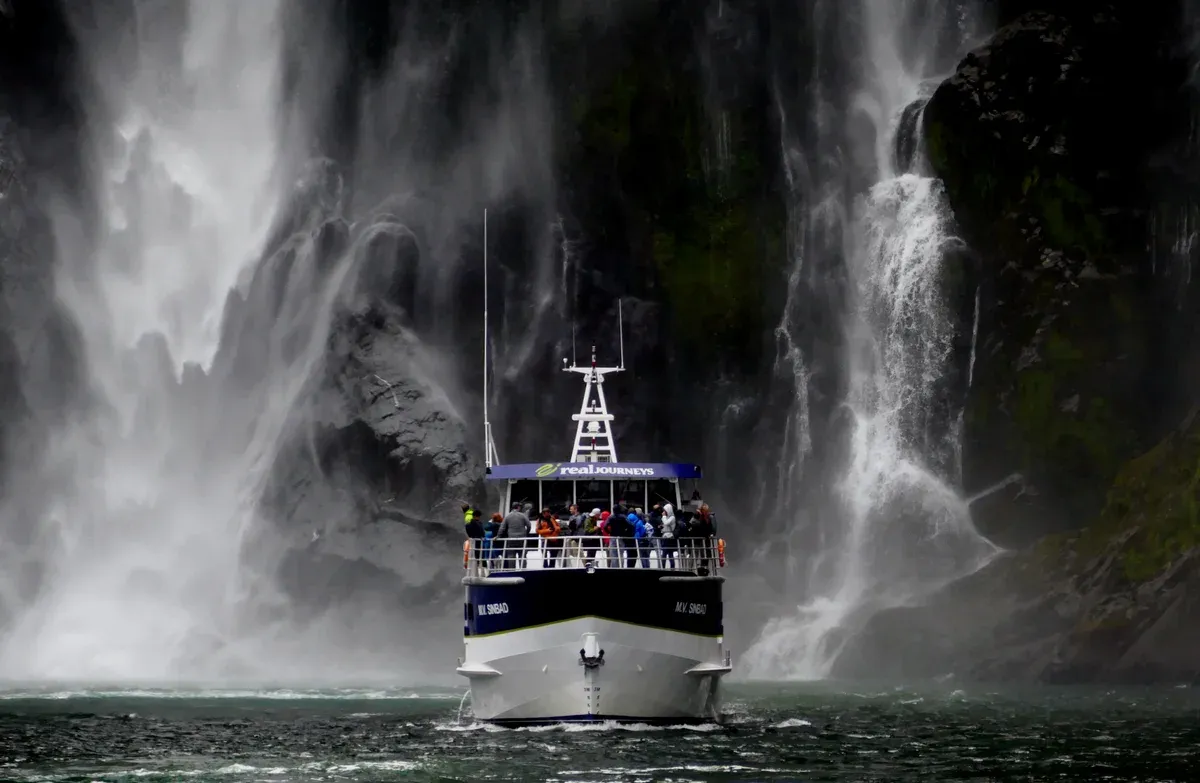
A cruise boat below the Bowen Falls at Milford Sound. Photo: Bernard Spragg. NZ from Christchurch, New Zealand, CC0, via Wikimedia Commons
What NOT to Wear or Bring
Most of the tours in this comparison publish no hard 'not allowed' list, though the Mitre Peak Small Boat Cruise lists smoking, drones, alcohol and drugs as not allowed. What follows is therefore advice built from the operators' own packing notes and the real conditions of the fiord and the road, not invented rules.
The Leave-Behind List
Cotton next to the skin is the top item to skip, because damp cotton in 92.8% average humidity keeps you cold all day. Heels and flip-flops come next: the wharf and outer decks are wet, and a sprained ankle at a terminal with limited phone coverage is a long afternoon. Umbrellas are pointless on a moving boat in Fiordland wind, and a jacket hood does the same job with both hands free.
Jewelry and loose valuables risk the spray under Stirling Falls, where you can get soaked. Drones are the one item with a hard legal edge: DOC rules require aircraft including drones to stay more than 150 m horizontally from marine mammals, and the fiord holds protected fur seals and dolphins, so leave the drone at home. The Mitre Peak Small Boat Cruise also lists drones as not allowed.
Finally, do not carry more luggage than you need. RealNZ recommends a single carry-on for its overnight cruise because of cabin space, and a small bag serves every day cruise just as well.
Packing Do's and Don'ts
The short version of this whole page, drawn from the operator lists and the fiord's climate record.
Do
- Do carry a rain jacket in every month, because rain falls on about 182 to 185 days a year and DOC says every visitor needs a good raincoat
- Do pack insect repellent for the foreshore and road stops, because sandflies gather there even when the cruise itself is comfortable
- Do bring your own food on boats that sell none, since the Mitre Peak cruise sells none and the Milford Sound Scenic Flights fly-cruise-fly asks you to carry a bag with food and drink
- Do wear non-slip shoes with a grip sole, because RealNZ names them first on its packing list
- Do take personal medication with backups, because Milford Sound Lodge advises bringing all essentials from Te Anau or Queenstown
Don't
- Don't wear cotton as your base layer, because it stays wet and cold in Fiordland's constant humidity
- Don't wear heels or flip-flops, because wet decks and a moving boat make them unsafe
- Don't bring a drone without permits, because DOC requires aircraft to stay more than 150 m from marine mammals
- Don't rely on buying supplies at Milford Sound, because Milford Sound Lodge advises bringing all essentials from Te Anau or Queenstown
- Don't overpack for a day cruise, because a small day pack covers what a day cruise needs
Packing by Season at Milford Sound
RealNZ's season-by-season temperature guide, matched with the airport climate normals, gives four genuinely different packing problems. The rain never changes. The warm layers do.
Summer, December to February
RealNZ puts summer at 18-25 C and the airport normals agree at a January mean maximum of 19.5 C. Pack light layers, a rain jacket in the day pack, sunscreen, hat and sunglasses, since darkness arrives after 9:00pm. February is the driest month by rain-day count at 12.8, though it still averages 466.6 mm. Summer is also the busiest season, with RealNZ calling January the busiest month, so book ahead and expect company on the top deck.
Autumn, March to May
RealNZ's autumn range is 12-20 C and the May mean minimum drops to 4.9 C, so the day-to-night swing is the story. RealNZ specifically suggests a raincoat and a waterproof camera cover for autumn, when Glenorchy Air notes the waterfalls run hard and the light softens. Pack a warm mid layer you keep on all day, warmer socks, and the rain jacket worn rather than carried.
Winter, June to August
RealNZ's winter range is 5-10 C and the July mean minimum at the airport is 1.6 C, with a record low of -6.1 C. Intrepid's advice for a winter visit is thermal clothing, and RealNZ offsets the cold with hot barista drinks or mulled wine on board. Pack a thermal base layer, a heavy fleece, a beanie, gloves and full waterproofs. Snow settles on Mitre Peak from June onward, and the Milford Road needs snow chains in vehicles when required in winter, which is a packing item for drivers, not walkers.
Spring, September to November
RealNZ's spring range is 10-18 C, and September and October carry the most rain days of any months at 17.6 each. RealNZ suggests binoculars in spring, because seal pups appear on the rocks from September and the Fiordland crested penguin breeding season runs from July to November. Daylight saving begins in late September, which adds evening light.
Pack as for autumn but expect colder early mornings, especially on early coach departures.
Full month-by-month figures sit in the Milford Sound weather guide, and the seasonal trade-offs are covered in the best time to visit Milford Sound advice.
Packing With Kids
A short note for families, since a cruise asks little of children but asks it for longer than they might like.
What Children Need on a Cruise
The core adult list applies to children with two changes. First, layers that come off fast: kids overheat in enclosed cabins, so a zip fleece beats a pullover. Second, snacks, because on boats that sell no food, children feel it first, and the Mitre Peak Small Boat Cruise explicitly expects you to bring your own in a bag.
Pack the sandfly repellent for the foreshore and the sunscreen for the top deck in equal measure, since the summer light runs past 9:00pm. On coach days, note the small-group operators include lunch but with age limits: the Cheeky Kiwi picnic lunch excludes infants aged 0 to 3, so carry food for toddlers. Winter adds a beanie and gloves for children before it does for adults, since they stand still on the outer deck while adults move.
What to Wear and Bring: FAQ
Is a Milford Sound cruise cold?
The cabins are enclosed and sheltered, but the outdoor decks feel the wind off the water in every season, and RealNZ's winter range of 5-10 C is a real chill with spray in the air. Wear a windproof layer over your warm layer and you will be fine on any Milford Sound boat tour.
Can I wear jeans to Milford Sound?
You can, but they are a poor base layer because denim stays wet and cold for hours when the spray from Stirling Falls or a shower reaches you, and nothing dries fast in 92.8% average humidity. Quick-dry trousers or thermals under waterproofs are the better answer for a boat-only cruise.
Can I wear shorts on a Milford Sound cruise?
Yes in summer, when RealNZ's December to February range reaches 18-25 C. Pair them with quick-dry fabric, a warm top layer for the wind on deck, and shoes with a grip sole rather than sandals without straps.
Do I need to bring food on a Milford Sound cruise?
Check your boat before you go, because it varies widely. The Mitre Peak cruise sells no food on board and the Milford Sound Scenic Flights fly-cruise-fly also asks you to carry a bag with food and drink, while the Glass-Roof Catamaran Cruise has a cafe and bar on board.
Do I really need insect repellent on the boat?
Not usually on the water, since Southern Discoveries says the sandflies are manageable on the cruises, but you will want it the moment you step ashore, because they gather along the foreshore and at the road stops like Monkey Creek. Pocket-size repellent covers both, and Fiordland tourism recommends it for the Milford Road stops too.
Does any tour provide rain gear?
No listing in this comparison includes rain jackets, and the RealNZ and Southern Discoveries packing lists both make the jacket the visitor's own item. Southern Discoveries sells ponchos on site as a fallback, but the advice from DOC and both major operators is the same: bring a proper waterproof, as the packing table above shows tour by tour.